Home/Technology/The ultimate eclipse chase: A Concorde raced against the Moon's shadow

The ultimate eclipse chase: A Concorde raced against the Moon's shadow

TechnologyAugust 8, 20262 min readAttributed summary
The ultimate eclipse chase: A Concorde raced against the Moon's shadow
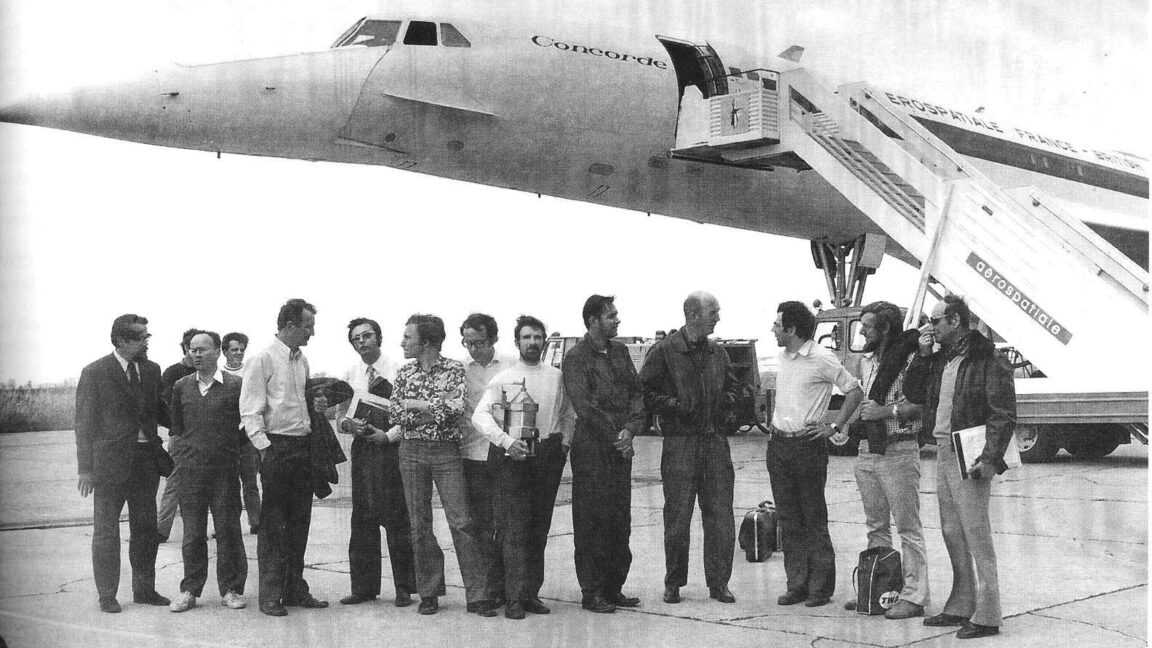
Fitted with telescopes, the plane did our longest imaging of the Sun's corona.
Reading Settings

A walk down the tarmac at the National Air and Space Museum of France is guaranteed to thrill aviation enthusiasts. Several civilian and military aircraft of the past and the present are showcased in this museum, located at the Paris-Le Bourget airport. One of them is the legendary Concorde F-WTSS 001 prototype, the sight of which should give goosebumps to science enthusiasts as well.

That’s because right behind its long nose is a painted map that traces the path of a June 1973 total solar eclipse across Africa. It’s there on the Concorde 001 prototype because a group of eight scientists set a new world record of observing a total solar eclipse for 74 minutes by flying this aircraft at more than twice the speed of sound.

To put this figure into context, the maximum duration of totality on the ground is around 7.5 minutes when an eclipse is observed in the equatorial regions. For the upcoming solar eclipse of August 12, which can be seen from parts of Europe, the maximum duration of totality from the ground will be slightly more than two minutes.

Read full article

Comments

Source: Ars Technica

Related technology stories

Raising the quality of insights in agentic analytics
Sourced report
technologyreview.com7 hours ago

Raising the quality of insights in agentic analytics

In just a few years, generative AI has changed the face of enterprise analytics, notably by making analytics accessible to users across the organization. Agentic AI promises to do even more, by automa

4 min briefingRead signal →
The agentic web is here
Sourced report
technologyreview.com7 hours ago

The agentic web is here

In 2001, a decade after he invented the World Wide Web, Tim Berners-Lee articulated a new vision. Together with two colleagues, he published an article in the magazine Scientific American in which he

20 min briefingRead signal →