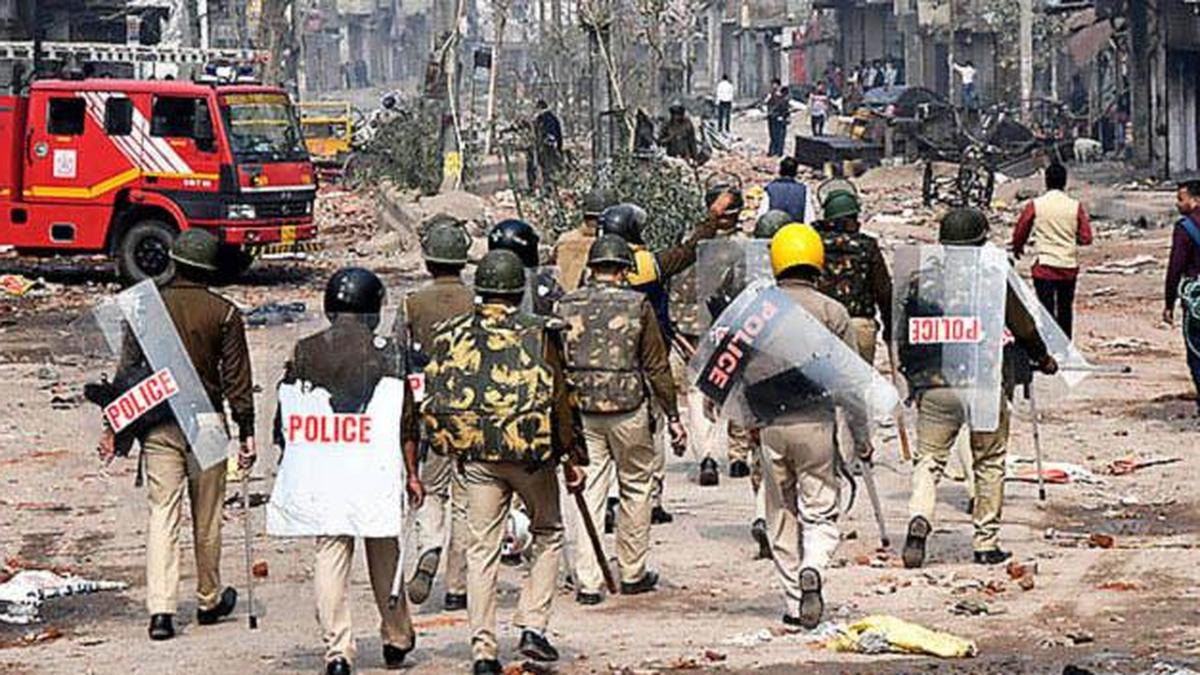
The Delhi High Court on Thursday (May 21, 2026) granted bail to Salim Mailk, who is accused of participating in the meetings, protest and chakka jams (transport strike) during the February 2020 riots in the national capital.
A Bench of Justices Prathiba M. Singh and Madhu Jain noted that Mr. Malik has been in custody for more than five years and 10 months and the stage of the trial is that arguments on the charges are being presently heard. “Accordingly, the trial is going to take some time. Under these circumstances, bearing in mind the role of the Appellant (Malik), this Court is of the view that the Appellant deserves to be released on bail,” it ordered.
The court also pointed out that the role attributed to Mr. Malik is similar to the role attributed to co-accused Mohd. Saleem Khan and Shadab Ahmad, who have already been granted bail by the Supreme Court.
Mr. Malik was arrested in June 2020. As per the First Information Report (FIR), he had participated in various meetings where he was alleged to have conspired with other co-conspirators as to the manner in which the protest would be organised and the nature of action to be taken by all the protesters.
Mr. Malik is also alleged to have been present at the protest site prior to February 24, 2020, along with the other co-accused and was involved in giving inflammatory messages and speeches. As per prosecution, Mr. Malik is also alleged to have participated in the riots by carrying bricks, rods, stones, etc. The prosecution stated that he incited clashes with the police, by participating in a mob.
Advocate Jawahar Raja, representing Mr. Malik, argued that his case was fully covered by the decision of the Supreme Court in Gulfisha Fatima case. He submitted that the role attributed to Mr. Malik is similar to the role attributed to Mr. Saleem Khan and Mr. Shadab Ahmad, who have already been granted bail by the Supreme Court.
In the Gulfisha Fatima judgment passed on January 6, 2026, the Supreme Court had categorised one set of accused persons in these matters as the core ideological drivers of the conspiracy, and certain other accused were described as local level facilitators and field operators.
“The prosecution narrative itself delineates Umar Khalid and Sharjeel Imam as occupying a position distinct from the remaining accused, both in terms of conceptual involvement and command over the alleged conspiracy,” the Supreme Court had said.
Mr. Khalid and Mr. Imam are attributed a central role and alleged to be ideological drivers of the alleged conspiracy, placing the duo in a different footing from the remaining accused.
“The charge-sheets attribute to them the role of formulating the protest strategy, including the alleged transition from sit-in demonstrations to chakka jams, selection of locations, and articulation of the broader political objective sought to be advanced. Their alleged acts are thus situated at the planning and preparatory stage, extending over a prolonged period,” the Supreme Court had noted.
“In contradistinction, the remaining accused namely Gulfisha Fatima, Meeran Haider, Shifa-ur Rehman, Mohd. Saleem Khan, Shadab Ahmad, Athar Khan, and others are consistently described as local-level facilitators. Their alleged involvement is site-specific and operational, confined to particular localities such as Seelampur, Jafrabad, Chand Bagh, Jamia, and Shaheen Bagh,” it had said.
Meanwhile, Mr. Umar Khalid moved the High Court on Thursday against a trial court order that dismissed his interim-bail plea to attend a 40-day post-death ritual (Chehlum) of his uncle and take care of his mother, who has to undergo a surgery. His appeal is listed for hearing on Friday.
Published - May 21, 2026 10:12 pm IST
Source: The Hindu - India News