The waiver “serves the public interest by promoting a second large satellite broadband constellation.”
The Federal Communications Commission has waived a requirement for Amazon to launch half of its satellite broadband constellation by the end of July, a key regulatory reprieve that buys the tech giant time to get more of its spacecraft into orbit.
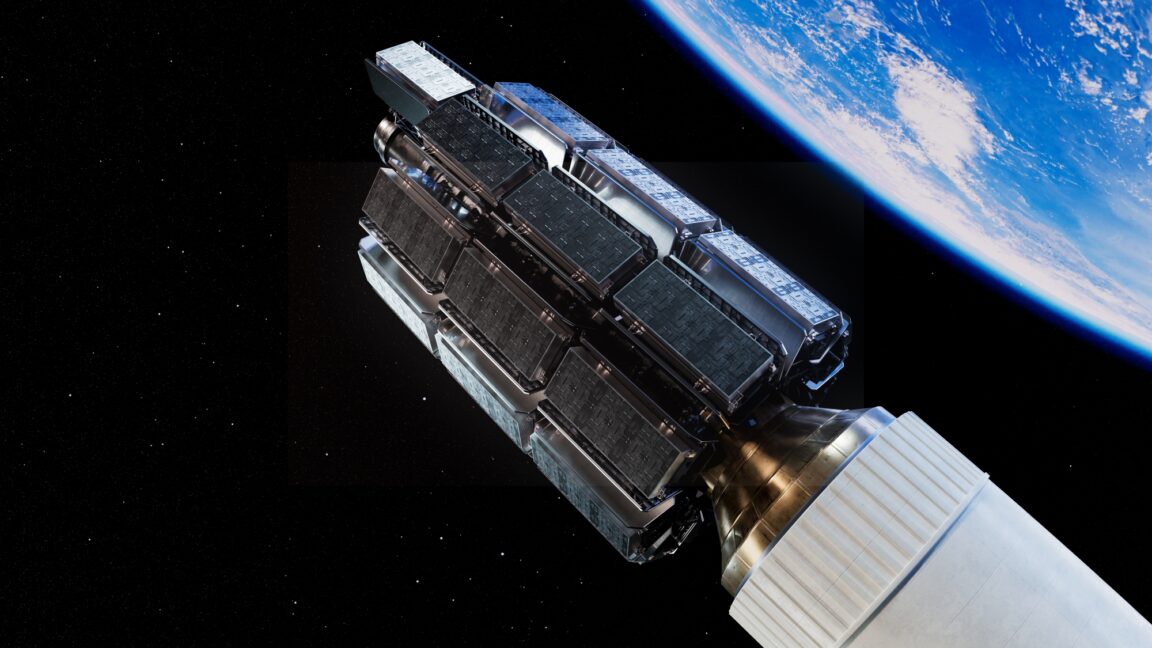
Amazon won regulatory approval for the Amazon Leo network in July 2020. The FCC’s authorization came with two deadlines. First, Amazon had to launch half of its 3,232 satellites by July 30, 2026, in order to maintain authorization to launch the rest of the network. The regulator gave Amazon a deadline of July 30, 2029, to have all of its first-generation satellites in orbit.
It has been apparent for some time that Amazon would not meet the FCC’s requirement to launch half of its satellites—1,616 spacecraft—by the end of next month. Amazon filed an application in January requesting the FCC extend the deadline to July 2028 or waive it altogether. The commission decided on the latter option, removing any time limit for the 50 percent deployment milestone, but keeping the July 2029 deadline in place for the entire constellation.
The FCC made its decision public in a letter Friday signed by Jay Schwarz, chief of the FCC Space Bureau. The ruling was expected. After all, Amazon is the only company with a realistic chance of launching a satellite broadband service to compete directly with SpaceX’s Starlink anytime soon. The FCC acknowledged the sparse competition in the satellite broadband sector in the letter.
“Waiver serves the public interest by promoting a second large satellite broadband constellation,” the FCC said. “At this time, only one operator, SpaceX, is providing broadband to American consumers from low-Earth orbit. Amazon Leo’s service promises to be ‘groundbreaking,’ both in quality of service and affordability for consumers. Amazon Leo has further invested significant resources into meeting its commitments, including more than $10 billion to deploy the system along with investments in physical infrastructure and manufacturing capabilities.”
Consideration of public interest and Amazon’s multibillion-dollar investment in Amazon Leo, formerly known as Project Kuiper, are among the “special circumstances” the FCC cited for doing away with this summer’s deadline.
“In this case, strict adherence to the rules would curtail Amazon Leo’s deployment of its Gen1 constellation by limiting the service it can provide to American consumers,” the FCC continued.
While the July deadline is gone, the FCC said it wants to incentivize Amazon to “continue deploying satellites at a rapid clip by temporarily demoting the spectral priority of satellites launched after the relevant July 2026 milestone deadline, until and unless Amazon Leo builds those satellites at a faster pace.”
Building satellites isn’t the biggest problem for Amazon Leo. It’s launching them. The company has stacks of satellites—each a little more than a half-ton in mass—awaiting rides to space on Blue Origin’s New Glenn rocket and United Launch Alliance’s Vulcan launch vehicle. Both rockets are grounded after recent anomalies.
Amazon has booked launches on other rockets, but none have the lift capacity to put as many satellites into orbit as Vulcan and New Glenn, each of which can deliver more than 40 Amazon Leo platforms to space in one go. United Launch Alliance’s soon-to-retire Atlas V rocket has done most of the heavy lifting for Amazon Leo to date, but just one more Atlas V is available to Amazon. It will launch in the coming weeks from Cape Canaveral, Florida, with 29 satellites.
Europe’s Ariane 6 rocket is on contract for 18 launches for Amazon Leo. Two of them have already flown, and the third one is set to launch later this month with 36 Amazon Leo satellites. SpaceX’s Falcon 9, capable of launching 24 Amazon Leo satellites at a time, has launched three times for Amazon.
In all, Amazon has purchased more than 100 launches for the Amazon Leo constellation. Thirteen of these launches are now complete, having deployed 333 satellites since October 2023, including two demonstration satellites that are not part of Amazon’s operational fleet.
Amazon initially reserved launches on all of the West’s commercially available heavy-lift rockets except those from SpaceX, which owns Starlink, Amazon Leo’s chief competitor. The freeze-out of SpaceX ended in 2023 when Amazon bought three Falcon 9 launches. The company has since added 10 more. SpaceX filed comments with the FCC opposing Amazon’s application for relief from this summer’s deadline.
There were optimistic signs recently that Amazon was about to turn a corner with its launch strategy. Blue Origin’s New Glenn, the most powerful vehicle in Amazon’s stable of rockets, was supposed to make its first launch for the Amazon Leo network earlier this month. Those plans went up in flames when the rocket exploded on its launch pad in Florida on May 28. The 48 Amazon Leo satellites that were awaiting launch on New Glenn were spared from the fireball.
In summary, Amazon is hitting a stride with launches on Atlas V and Ariane 6, and perhaps soon with Falcon 9. It’s getting close to launching 80 satellites per month, as officials predicted three years ago. But the Atlas V is about to become unavailable. When Amazon asked the FCC in January to extend or waive this year’s deadline, the company estimated it was on pace to have deployed around 700 satellites by July 30, 2026. The number is likely to end up close to 400. Delays with New Glenn and Vulcan are largely responsible for the missed schedules.
Amazon argued that the delays with Amazon Leo have been “unforeseeable,” and that the company’s expenditures and progress “demonstrate an overall commitment to deploying its system,” the FCC said.
None of the rockets—Ariane 6, New Glenn, or Vulcan—to which Amazon originally entrusted the bulk of its missions had reached the launch pad when the company announced its massive launch order in 2022. Only the Atlas V had any flight heritage, and its lifetime was finite. Vulcan and New Glenn still haven’t delivered for Amazon Leo, and until they do, the company’s only options are to continue flying with rival SpaceX or wait for the heavy-lift launch spigot to finally open.
It is true that Amazon’s commitment is real and substantial. The company has spent hundreds of millions of dollars to pay for a new integration hangar and mobile launch platform for ULA’s Vulcan rocket in Florida in a bid to shore up the Amazon Leo launch cadence. But as this investment is finally coming to fruition, ULA has suspended Vulcan launches to investigate a recurring problem with its strap-on solid rocket boosters.
Source: Ars Technica