FBI will pay vendors to help it track and search for vehicles nationwide.
The Federal Bureau of Investigation announced plans to buy nationwide access to a network of license plate readers, saying it will award contracts to one or more vendors that can offer “near real time” information from cameras across the US. The proposed contract is for the FBI Directorate of Intelligence.
“To evaluate and manage threats to personal safety, property, and law enforcement, the FBI requires professional service firms that can provide License Plate Readers (LPRs) for tracking subjects on roads and highways over the US and its territories,” the FBI said in a Request for Proposals (RFP) published on May 14. The FBI said the winning bidder or bidders “must provide law enforcement and/or commercial license plate reader data provided through the Contractor’s existing platform.” The system must cover 75 percent of locations, the FBI said.
The system must offer the ability to search for license plate information “and other descriptive data such as vehicle description information, time/date criteria, and geo-location criteria,” the FBI said. “Additionally, the system must provide search result notifications. The Contractor system must have the ability to access and/or query cameras across the United States and its territories. The Contractor system must be capable of providing this data in near real time.”
Contractors have to be able “to share/create maps depicting camera coverage (i.e. heat mapping),” and “provide the FBI the source of information (i.e. red-light cameras, repossession vendors, speed cameras, etc.),” the FBI said. The FBI said it needs to be able to search the database for partial or full plate numbers, plate states, addresses, locations where a plate was scanned, and vehicle makes and models.
The RFP divides the proposal into six regions covering the continental US, Hawaii, Alaska, Puerto Rico, and territories such as Guam and the US Virgin Islands. The FBI said it may award contracts to one or two vendors in each region. The deals can be for up to five years, with all deals combined potentially worth $36 million. The FBI said a contractor’s system has to be available to FBI users via a website.
Flock and Motorola Solutions are well-positioned to bid on the contract, as 404 Media noted yesterday. Both companies could win part of the job, as the FBI said it may award contracts to multiple vendors to achieve its desired level of access.
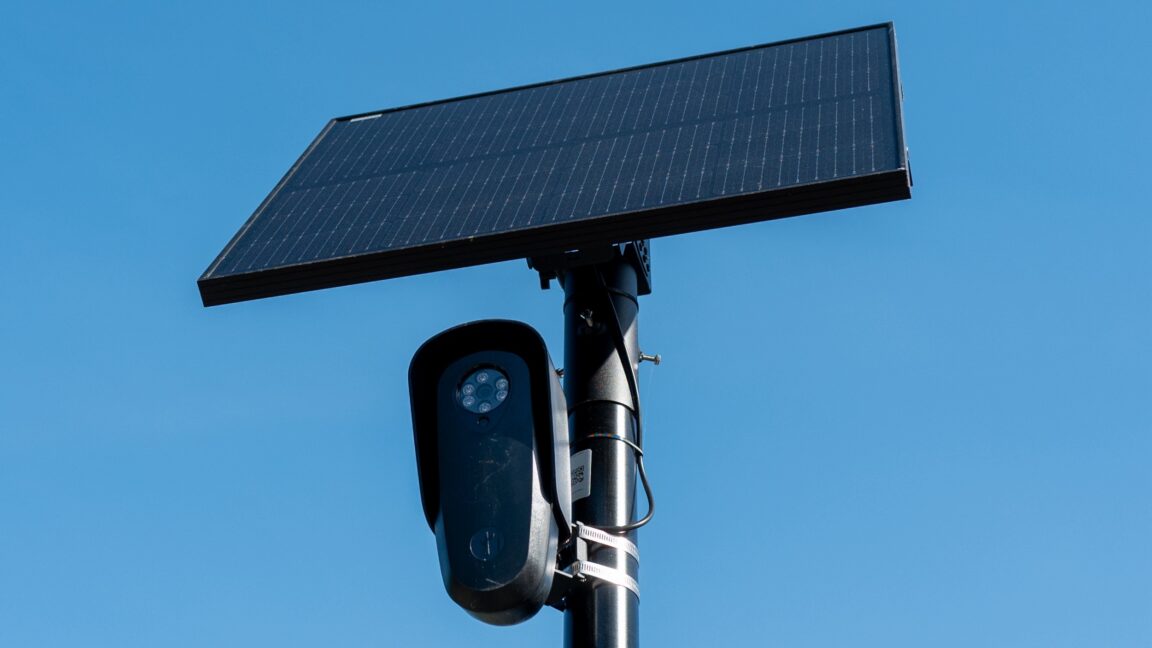
Flock’s Automated License Plate Readers (ALPRs) are sold to local police departments. The company boasts of having deals with “over 12,000 public safety customers including cities, towns, counties, and business partners.” Motorola Solutions sells license plate reader cameras that can be installed on busy roadways or mounted on police cars.
License plate reader cameras have raised concerns about privacy, data security, and errors in plate number recognition systems leading to wrongful arrests. 404 Media reported last year that local police departments performed searches of the Flock license plate reader system for US Immigration and Customs Enforcement (ICE), “giving federal law enforcement side-door access to a tool that it currently does not have a formal contract for.”
The FBI already “runs a License Plate Reader program to facilitate LPR information sharing with and between its law enforcement partners,” a Congressional Research Service report says. The US agency “maintains a hot list of vehicle data against which law enforcement agencies can compare their LPR data.”
The FBI intelligence division’s plan to obtain direct access to an extensive network of cameras could help expand that information sharing. As the FBI notes, its intelligence division shares information with a variety of federal, state, local, and tribal law enforcement agencies.
Flock itself temporarily provided access to Customs and Border Protection, Homeland Security Investigations, the Secret Service, and Naval Criminal Investigative Service as part of a pilot last year. Flock confirmed the pilot to the office of Sen. Ron Wyden (D-Ore.), according to Wyden. Flock says it has federal customers “including National Parks, Veterans Affairs hospitals, and military bases,” but that it does not work with ICE.
Federal attempts to access data could be limited by company policies. Flock says that communities using its cameras may grant data access to federal agencies, but that sharing with federal agencies is disabled by default. In March, Flock said it was “defining a new relationship with federal law enforcement,” including conditions to maintain local control over the sharing of data.
“Flock data belongs to the agency that owns the cameras. There is no backdoor into Flock. Any access is explicitly permission-based and opt-in by the local agency,” the company said.
We contacted Flock and Motorola Solutions and will update this article if they provide any comment.
There are also state laws limiting data access. California prohibits state and local agencies from sharing ALPR camera data with out-of-state or federal law enforcement agencies. The Electronic Frontier Foundation (EFF) said in January 2024 that dozens of California law enforcement agencies violated the law by sharing ALPR information with out-of-state agencies.
A Virginia law enacted last year imposed similar limits. The FBI’s request for proposals said contractors must identify the location of servers where data is stored to verify compliance with state and local laws on license plate reader data.
Source: Ars Technica