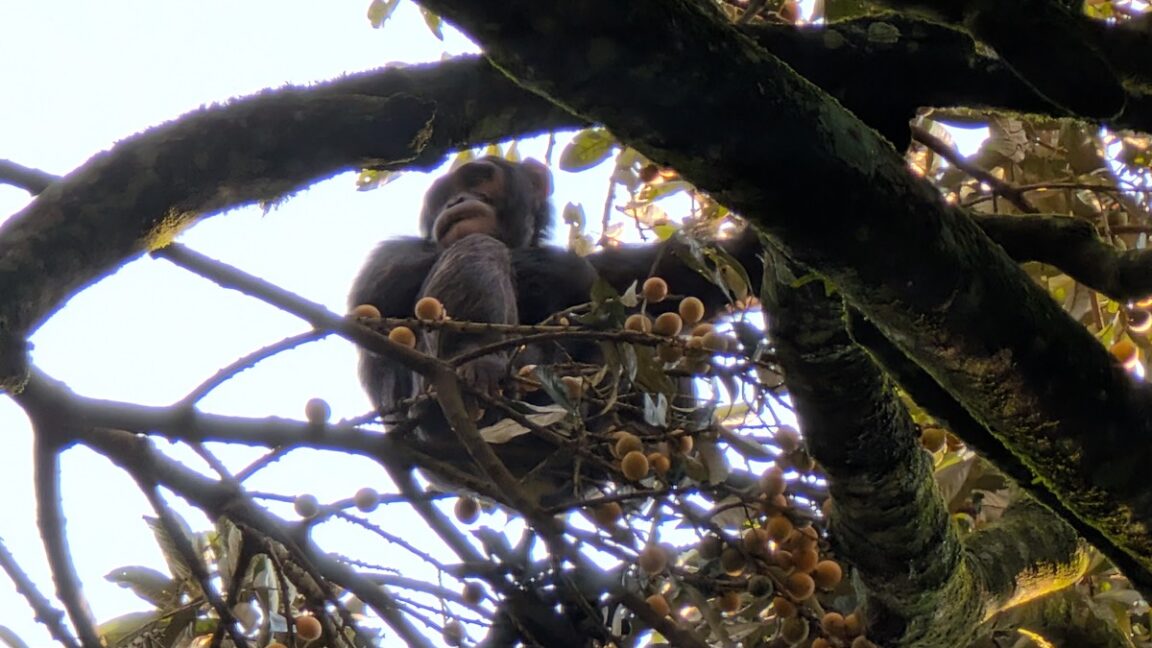
The urine of chimpanzees contains high levels of alcohol byproduct, most likely because the chimps regularly gorge themselves on fermented fruit, according to a new paper published in the journal Biology Letters. It's the latest evidence in support of a hotly debated theory regarding the evolutionary origins of human fondness for alcohol.
As previously reported, in 2014, University of California, Berkeley (UCB) biologist Robert Dudley wrote a book called The Drunken Monkey: Why We Drink and Abuse Alcohol. His controversial “drunken monkey hypothesis” proposed that the human attraction to alcohol goes back about 18 million years, to the origin of the great apes, and that social communication and sharing food evolved to better identify the presence of fruit from a distance. At the time, skeptical scientists insisted that this was unlikely because chimpanzees and other primates just don’t eat fermented fruit or nectar.
But reports of primates doing just that have grown over the ensuing two decades. Earlier this year, we reported that researchers had caught wild chimpanzees on camera engaging in what appears to be sharing fermented African breadfruit with measurable alcoholic content. That observational data was the first evidence of the sharing of alcoholic foods among nonhuman great apes in the wild. The authors measured the alcohol content of the fruit with a handy portable breathalyzer and found almost all of the fallen fruit (90 percent) contained some ethanol, with the ripest containing the highest levels—the equivalent of 0.61 percent ABV (alcohol by volume).
Read full article
Comments
Source: Ars Technica